
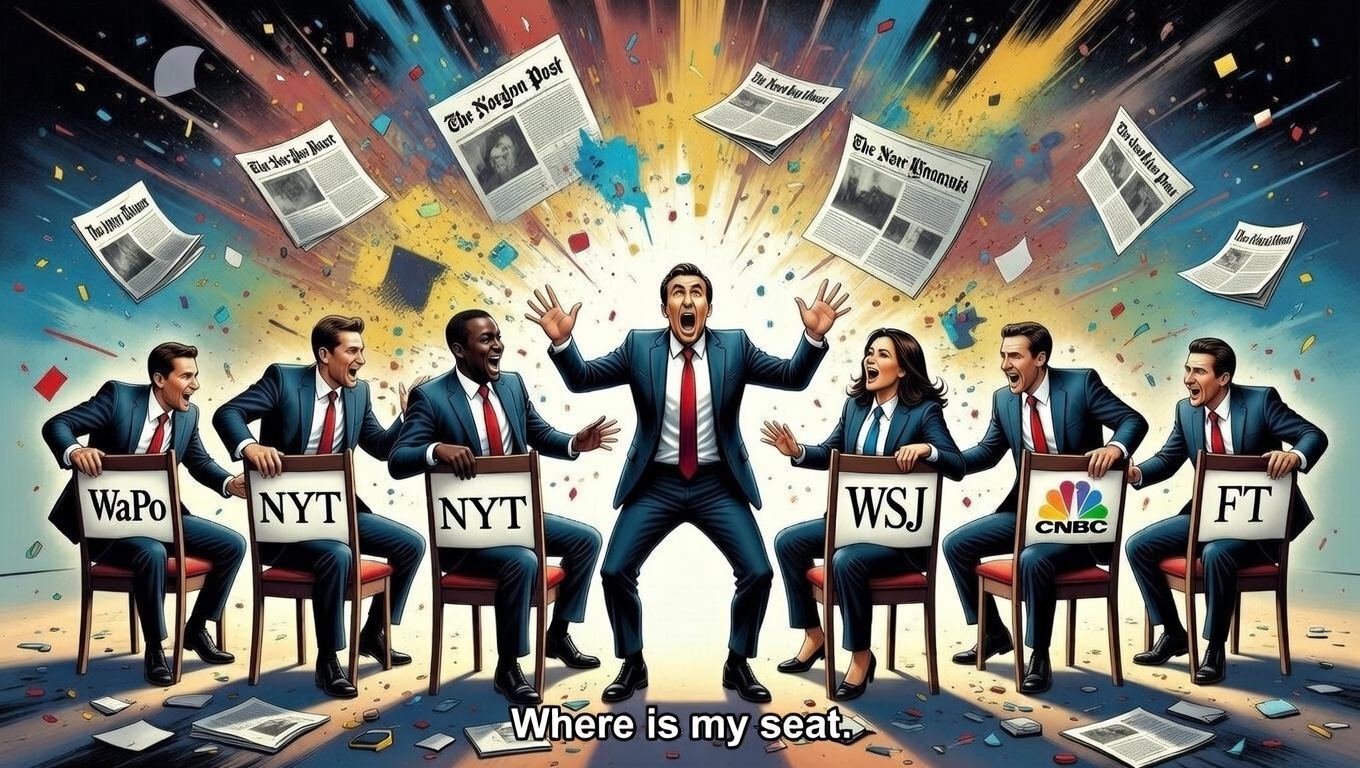
“What’s eroding isn’t just coverage — it’s institutional capacity, and that has direct implications for how authority is earned, validated, and sustained.”
In a stunning blow to legacy media, The Washington Post announced on February 4, 2026, that it would lay off roughly one-third of its workforce, including more than 300 journalists. Insiders described the cuts as an “absolute bloodbath,” wiping out sports, books, international bureaus, and large swaths of local coverage.
For law firms, this may initially feel remote. High-stakes legal thought leadership rarely depends on metro desks or lifestyle sections. But focusing on what was cut misses the larger signal. What’s eroding isn’t just coverage — it’s institutional capacity, and that has direct implications for how authority is earned, validated, and sustained.
The value of placements in elite publications undeniably persists. A quote or op-ed in a top-tier outlet still signals credibility to sophisticated clients, peers, and referral sources. In an era of relentless content and algorithmic noise, these legacy badges continue to convey seriousness and selectivity — forms of gravitas most “new media” platforms still struggle to replicate.
But value and accessibility are now diverging.
Prestige outlets increasingly resemble venture capital firms: highly selective, asymmetric, and disproportionately rewarding to those who already have momentum. Fewer reporters, narrower beats, and higher editorial thresholds mean that generic commentary and incremental insight are no longer merely inefficient, they’re invisible.
This creates an uncomfortable reality for legal marketers: the payoff of top-tier media may be increasing at the exact moment the odds of securing it are declining.
The response should not be abandonment, nor panic diversification into every new podcast or newsletter. It should be strategic rebalancing:
— Legacy media should be repositioned as capstone validation, not the foundational narrative.
— Authority should be built upstream through proprietary research, client-driven insight, forums, and relevant digital platforms where firms control both depth and context.
— Only then should legacy placements be deployed to punctuate and authenticate that work — as the mic-drop, not the monologue.
Firms that rely on a single quote to carry the weight of an entire narrative will increasingly find themselves exposed.
The deeper question law-firm leaders should be asking is this: If the institutions we once relied on to confer authority are contracting, where — and how — are we deliberately building it instead?
In that sense, the Post’s cuts are not merely a media tragedy. They are a preview of tomorrow’s authority landscape.
By John Hellerman, President & Founder, Hellerman Communications
See John’s posts summarizing this article on X and LinkedIn.